Skip to content
AI servicesAI software development

Useful AI features, built into real software

I turn a promising AI use case into software people can trust: grounded in your data, integrated with your product, tested against real examples, and observable in production.
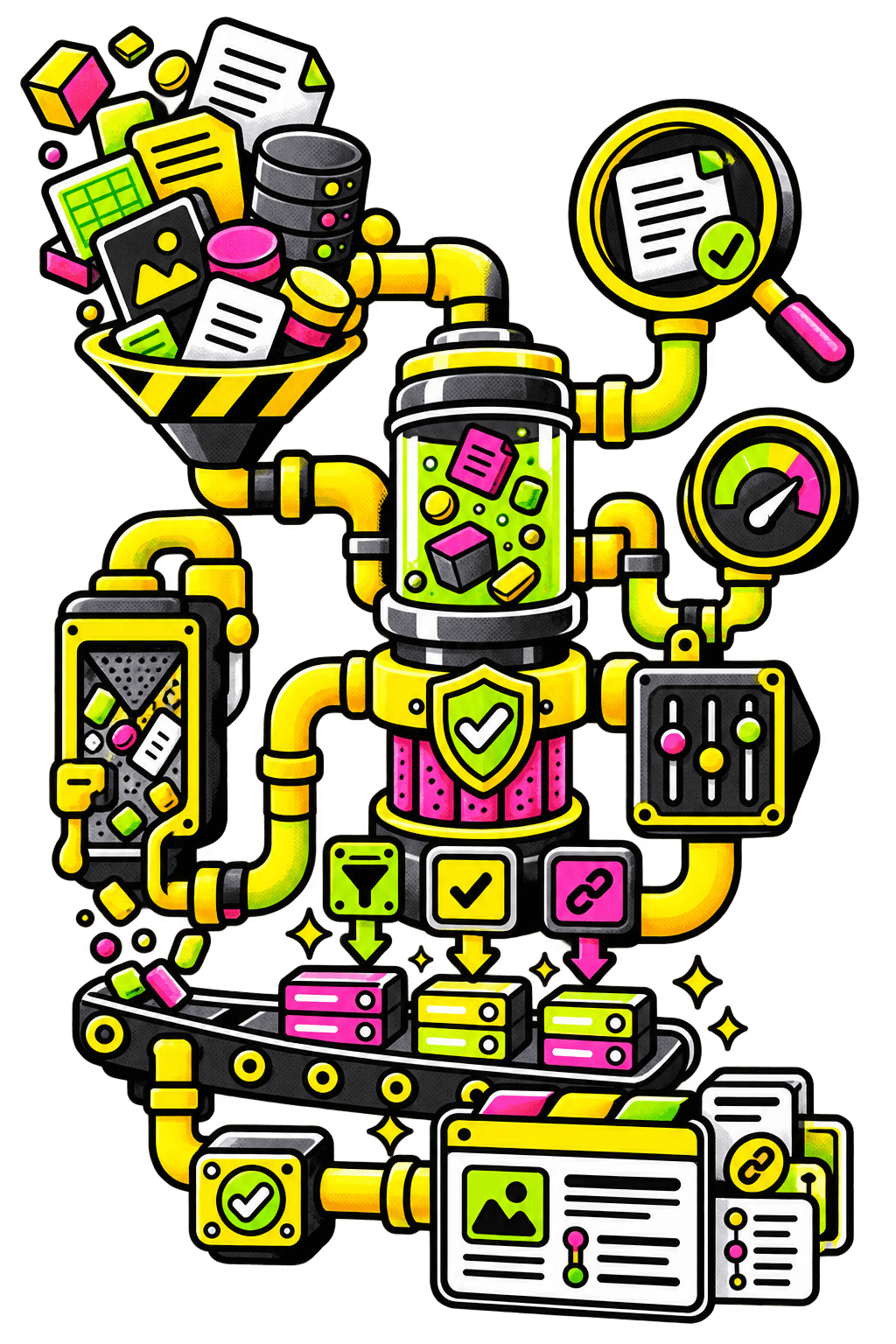
An AI development engine filtering documents and data into checked, structured product outputs

The offer

Move beyond the chatbot demo to a focused feature with clear user value, evaluation criteria, and operating costs.

Prototype first, production second

What changes

Useful outcomes. Not AI theatre.

01

Grounded answers

Connect models to approved knowledge, citations, and retrieval instead of relying on confident guesses.

02

Reliable workflows

Use structured outputs, validation, evaluations, retries, and fallbacks around probabilistic models.

03

Known running costs

Track model usage, latency, caching, and quality so the feature remains economically sensible.

Good fit

Built for a real constraint

  • Products adding a focused AI capability
  • Teams working with large document collections
  • Businesses that need extraction, classification, or search
  • Technical leaders who want an experienced build partner

What you get

A build you can inspect

  • Use-case and model-fit assessment
  • Clickable or working technical prototype
  • Prompt, retrieval, and tool architecture
  • Evaluation examples and quality checks
  • Production integration and monitoring
  • Security, cost, and handover documentation

Delivery model

Small bet. Fast proof. Then scale.

  1. 1

    Define useful

    We specify the user decision or task the feature improves and what a good output looks like.

  2. 2

    Test the uncertain parts

    I prototype with representative data to expose model, retrieval, latency, and cost limitations early.

  3. 3

    Build the product layer

    The AI is wrapped in usable interfaces, permissions, validation, analytics, and failure handling.

  4. 4

    Evaluate continuously

    A repeatable test set catches regressions as prompts, models, data, and product behaviour change.

FAQ

Straight answers

Which AI models do you work with?
I choose providers and models around the job, data sensitivity, latency, quality, and cost rather than forcing every project onto one vendor. The architecture can preserve options where switching matters.
Can you use our private company data?
Yes, where the data and provider terms allow it. The design can include access controls, scoped retrieval, redaction, retention choices, and clear separation between tenants or teams.
How do you reduce hallucinations?
By narrowing the task, grounding outputs in approved sources, requiring structured responses, adding citations or verification steps, and testing against examples—including cases where the system should say it does not know.
Can you add AI to an existing product?
Yes. I can work within an existing Next.js, React, Node, or API-based product, or build a separate service that integrates with it. A short technical review determines the cleanest boundary.

No-obligation project call

Bring me the bottleneck

Tell me what is slow, expensive, or hard to scale. I'll reply within 24 hours with useful questions and the clearest next step—even if that step is not AI.

What happens next

A short fit check, a focused call, then a written scope covering outcome, timeline, cost, risks, and what I need from you.

Or email hello@webdevherts.co.uk
Ready